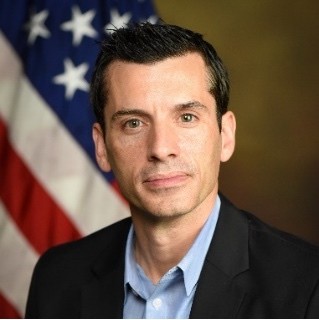
 Alberto Ruisanchez (1996-1998 and 2002-2025; Housing and Civil Enforcement, Voting, Disability Rights, and Immigrant and Employee Rights Sections and Front Office). Alberto currently works for Catholic Charities Legal Network, which provides legal services to low income residents of DC and southern Maryland, regardless of background or beliefs. He also is a Lecturer for Stanford University’s DC campus, teaching civil rights law and criminal justice. Alberto is a CRDA board member and, in addition to participating on the first panel of the convening, served as the event's emcee. This is his reflection on the convening:
 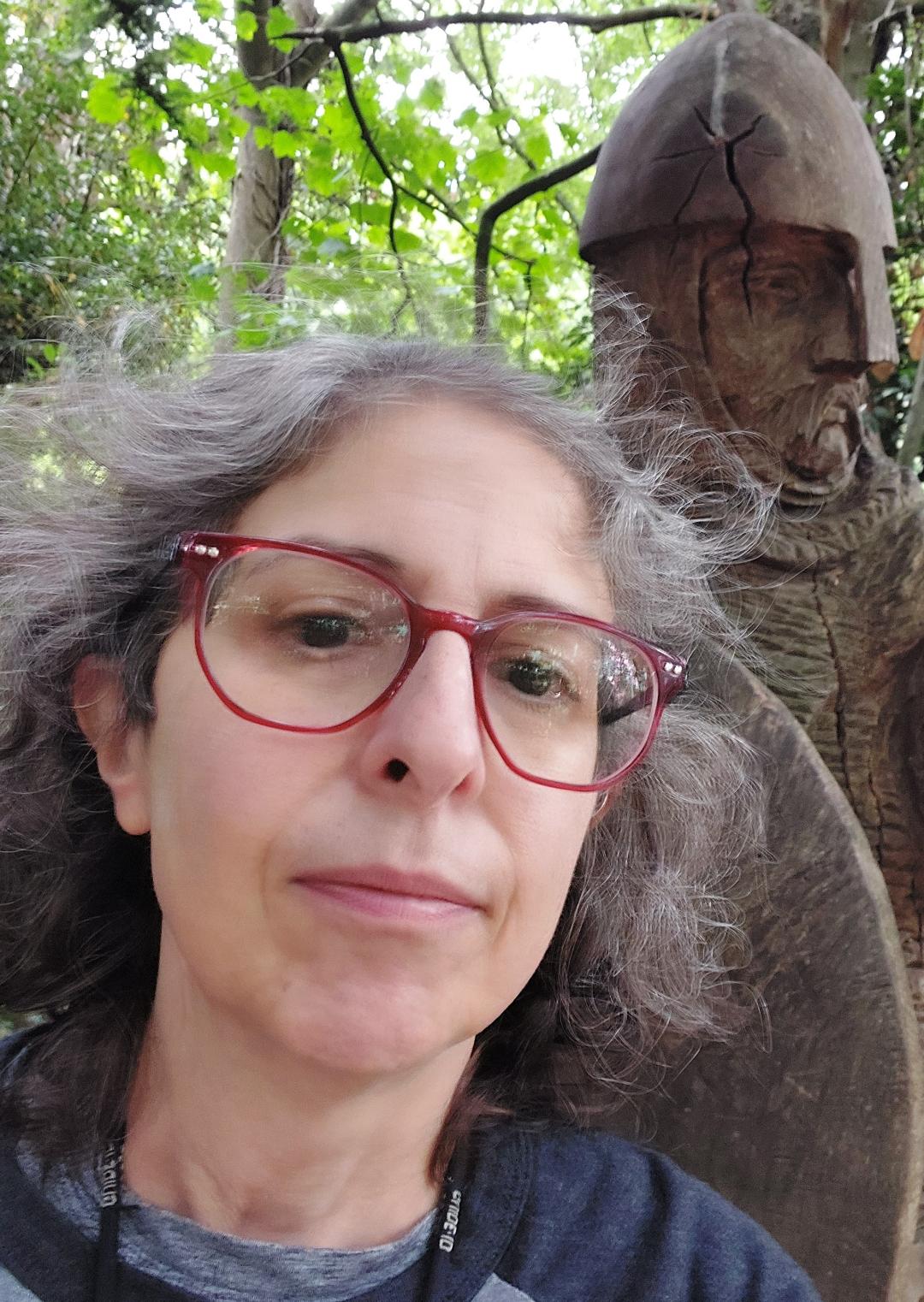 Barbara Kay Bosserman (2000-2025; Criminal Section). Barbara is now a founding partner at the civil rights firm of Bernstein & Bosserman, PLLC. She maintains a Substack on civil rights history. If you are interested in history or civil rights, check it out
 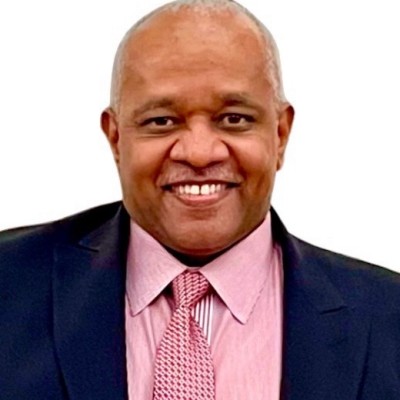 Jon Seward (1994-2003 and 2007-2023; Housing and Civil Enforcement Section). Before retiring, Jon conceptualized and led the Division's Combating Redlining Initiative as well as the One Division program. Jon spoke about One Division on the panel but did not have time to sufficiently cover the Division's fair lending work. Here he provides more information about the Combating Redlining Initiative:
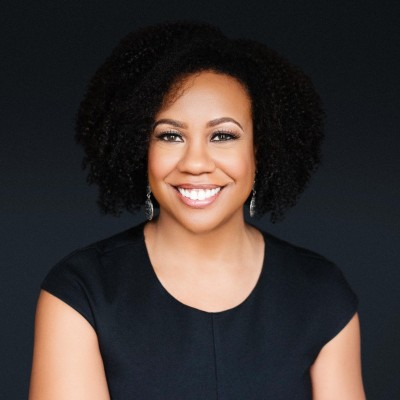 Daria Neal (2010-2025; Federal Coordination and Compliance and Policy and Strategy Sections). Daria is currently an Adjunct Professor at Howard University School of Law and George Washington University Law School. In addition, she will soon
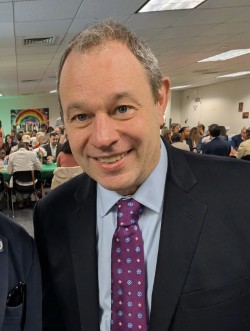 Michael Campion (2016-2025; Chief Civil Rights Chief, U.S. Attorney's Office, District of New Jersey). Mike is now Deputy Director of the New Jersey Division on Civil Rights, the agency charged with enforcing New Jersey's civil rights laws. Here he reflects on the U.S. Attorney's Offices civil rights practices:








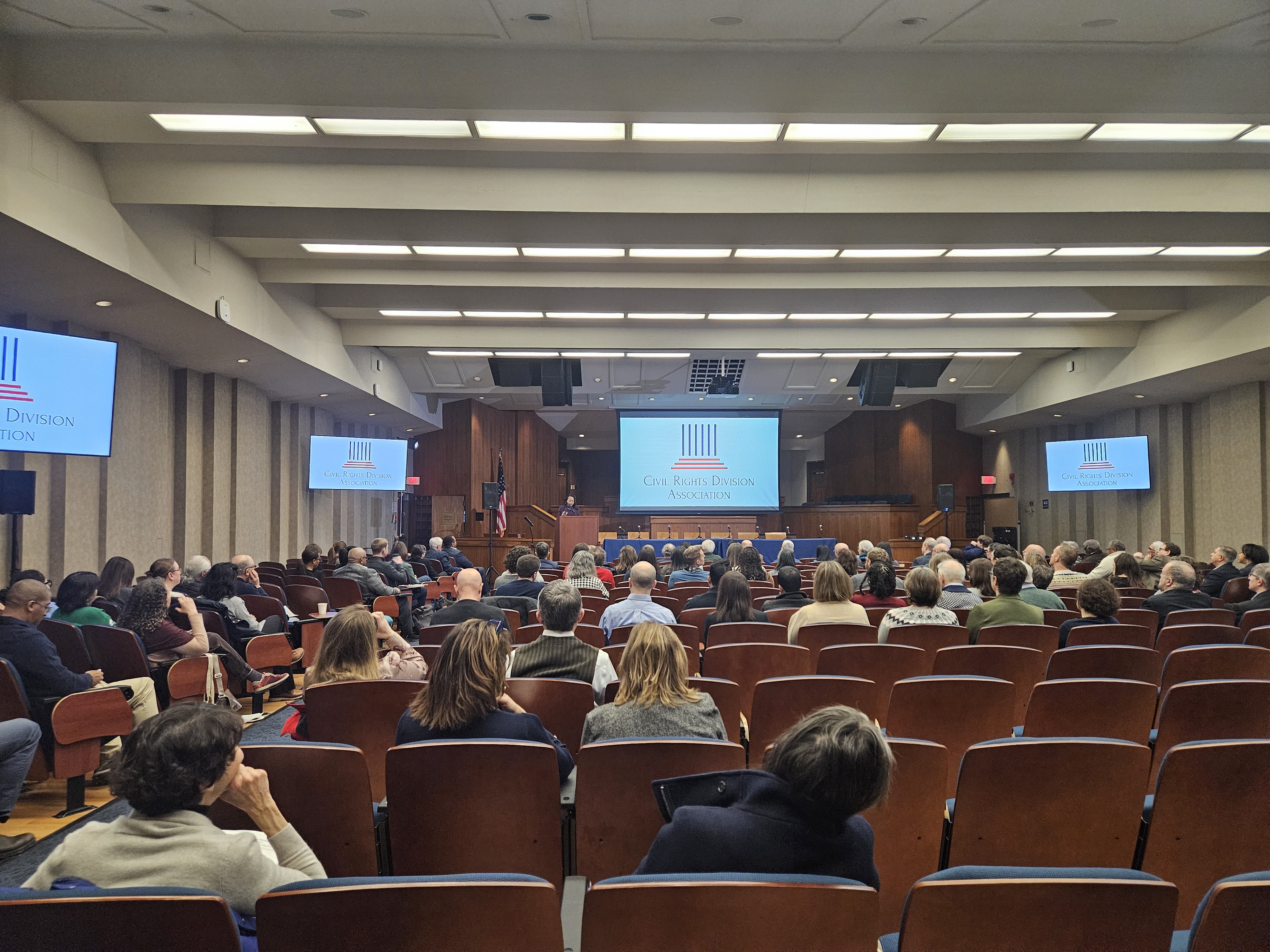
Thank you to everyone who attended the January convening! Here is a special post-convening edition of the CRDA Newsletter!
Civil Rights Division Association
NEWSLETTER
Special Post-Convening Edition
Feb. 2026 (Issue 18)
The Civil Rights Division Association (CRDA) is a non-partisan organization composed primarily of former employees of the Department of Justice Civil Rights Division. The CRDA is a membership organization and is not affiliated with the U.S. Department of Justice or any other government agency. Any views expressed in the CRDA Newsletter are those of the author.
IN THIS ISSUE
1. FROM THE CRDA BOARD
2. THE PAST: REFLECTIONS FROM OUR PANELISTS
3. THE PRESENT: UPDATE FROM REGAN RUSH
4. THE FUTURE: HOW TO GET INVOLVED
5. PHOTO GALLERY
1. FROM THE CRDA BOARD
Dear members,
The response to the January convening, "The Civil Rights Division in the 21st Century: Looking Back and Moving Forward," has been overwhelmingly positive. As one of our Board members said, "the event captured the warmth, spirit, and dedication of the Division." It was a family reunion that fed the soul at a time when many of us needed it most, and it provided hope for the future. More than 200 members attended--most braving the cold and ice to attend in person in Washington, DC, and many others tuning in from home (including from around the world - hi, Tovah!). From the bottom of our hearts, we thank everyone who attended and pitched in to make the day possible, particularly our planning committee and esteemed panelists and speakers. We also owe a special thanks to Howard University School of Law for hosting us and to the law firms that sponsored us.
We are listening to your feedback, which has included requests for more programming. We are working on it, but please keep in mind that CRDA is an organization led solely by volunteers! To that end, we welcome your involvement. And if you know anyone who has not yet joined CRDA, please encourage them to do so by visiting the CRDA website at CRDAssocation.org. Donations can also be made on the website!
We hope that you enjoy this special edition of the newsletter, which includes additional reflections from our panelists; an update on the state of the Division and a new initiative from Regan Rush; information about how to get involved in potential planning for the Division's future; and a photos from our big day.
Sincerely,
Your CRDA Board
2. THE PAST: REFLECTIONS FROM OUR PANELISTS
Two hours was not nearly enough time to cover the Division's accomplishments in the first quarter of the century. This was an extraordinary period in our country's history. It began with a devasting terrorist attack on U.S. soil and ended with a deadly pandemic. In between those events, the country was engaged in multiple wars; elected its first African-American president; suffered an economic recession; experienced new and exciting technological developments; and saw movements in support of LGBTQI rights, Black lives, and increased awareness of sexual harassment and abuse in the workplace. The Division was there through it all, enforcing the Nation's civil rights laws.
Among so many other accomplishments, the Division protected people from post-9/11 backlash discrimination; enforced the Supreme Court's Olmstead decision regarding integration of people with disabilities; reformed police departments, jails, and prisons; successfully advocated for and later defended the Hate Crimes Prevention Act; combatted human trafficking using the new Trafficking Victims Protection Act; held financial institutions accountable for predatory lending and redlining; advanced the rights of LGBTQI individuals, including by helping to bring about marriage equality; promoted environmental justice; protected the rights of servicemembers following the reassignment of such duties from the Civil Division; prosecuted law enforcement officers who violated constitutional rights; successfully defended the Fair Housing Act's disparate impact standard; promoted accessibility in technology for people with disabilities; defended Section 5 of the Voting Rights Act and then sought creative ways to protect the franchise after Shelby County; ensured language access in federally funded programs and activities; obtained relief for survivors of sexual harassment in housing and employment; and expanded courts' understanding Title VII's protections. At the same time, the Division underwent significant organizational changes, which included the addition of the Professional Development Office, the Policy and Strategy Section, and the U.S. Attorney Initiative. Most of the Division also moved into a new office building, enabling closer collaboration across sections, including through a new One Division program.
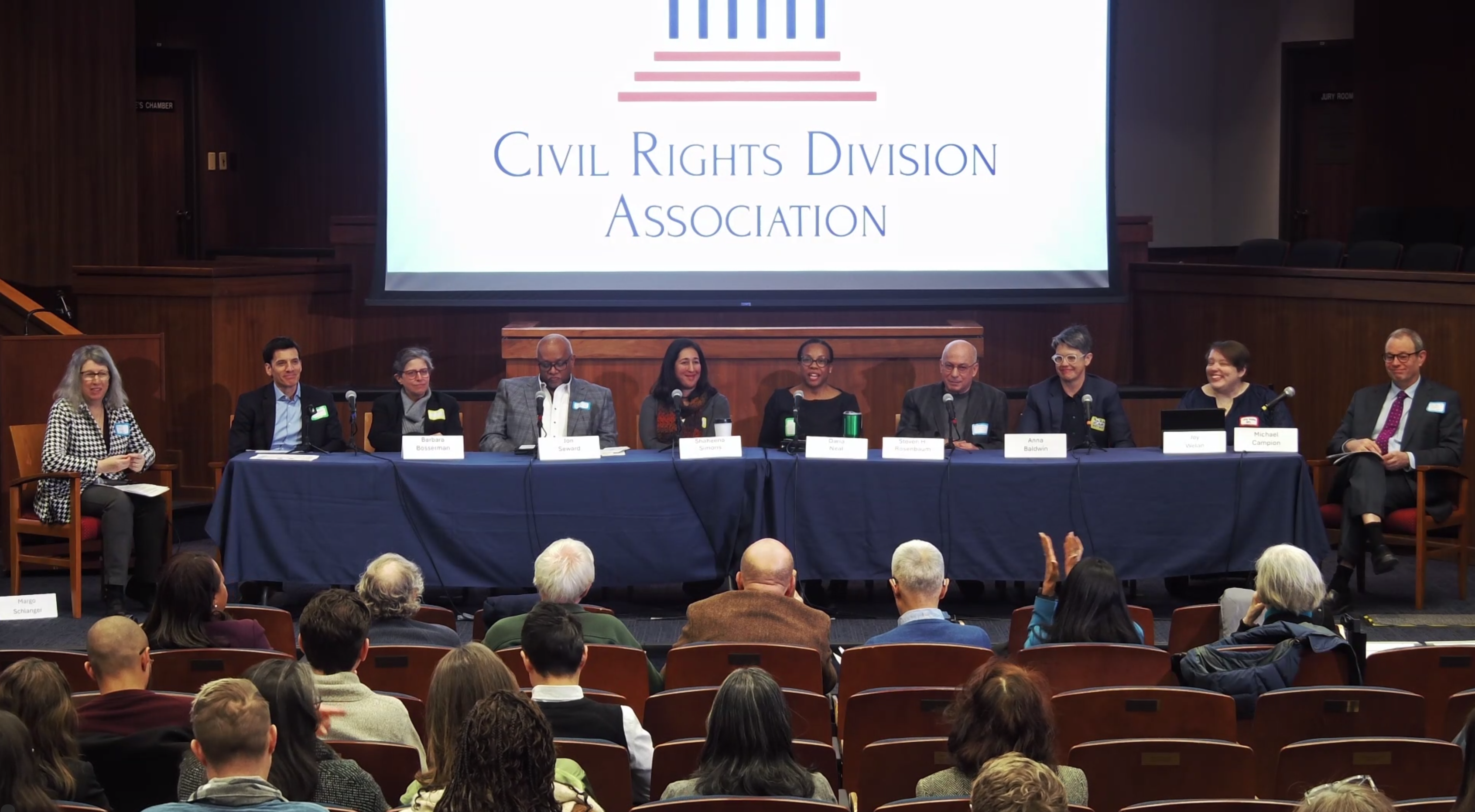
Members of "The Past" panel included former career managers and attorneys who worked in the Division in the early part of the century as well as more recently; who served under multiple administrations and in multiple sections, including the front office; who collaborated closely with the Division from a U.S. Attorney's Office; and who had diverse professional and personal backgrounds. Moderated by CRDA co-president Margo Schlanger, the panelists addressed many of the Division's most significant accomplishments and changes from 2000 to 2024. Below are some of their reflections.
|
The Civil Rights Division Association’s annual meeting was a joyful reunion of the big‑hearted, fiercely dedicated public servants who have shaped the Division across generations. Current and former Division colleagues filled the room with the same ethos that has defined the work since its inception: love, courage, and an unwavering commitment to justice. The event offered, among other things, a rare and inspirational opportunity to reflect on the Division’s extraordinary accomplishments from 2000 through 2024. Hearing about cases that were litigated, communities that were helped, and rights that were protected reminded us how much of an impact a group of determined advocates can have when they bring both skill and heart to the work. Not only were the reflections inspiring, they were also a call to continue the mission with renewed energy. One of the things that made the event especially meaningful for me was the sense of community that endures even though we are scattered across the country, in different roles and chapters of our lives. Though dispersed, the Civil Rights Division network remains vibrant, supportive, and deeply connected. I am very grateful to Margo Schlanger, Amanda Maisels, and Tovah Calderon, whose hard work, attention to detail, and care made the gathering an enormous success. Their efforts ensured that the event honored the past, examined the present with a clear eye, and provided important insights into the Civil Rights Division’s future. I am also grateful to the Howard University School of Law students who volunteered their time and talent. Their professionalism, enthusiasm, and presence reminded us that the future of the civil rights movement is bright. They represent the next generation of advocates—brilliant, committed, and ready to lead. And they provide us with hope for what lies ahead. |
|
|
These are Barbara’s remarks, delivered on January 31, as remembered by the author: The Criminal Section made many improvements between May 2000, when I first began working there, and April 2025, when I left. The Criminal Section, of course, investigates and prosecutes human trafficking, law enforcement misconduct, hate crimes, and crimes involving clinic violence. In my opinion, the Section became more efficient and effective throughout this period. I attribute this to two things. First, Congress gifted us with new statutes – although “gifted” is the wrong word; we fought hard for every good statute Congress enacted during the time period. Second, the Section became more specialized, creating new units to take some of the burden off of trial attorneys, which, in turn, allowed them to prosecute more cases. Internal Changes and Increased Specialization Between 2000 and 2025, the Section put a lot of new resources into helping line attorneys do their jobs better. The training improved dramatically during this period, not just for the Criminal Section but throughout the Division, due in large part to the creation of the PDO and work of Jessie Ginsburg. Can I hear some applause for Jessie and the PDO? The Criminal Section also became more specialized during this time period. When I arrived in May of 2000, the Section had recently split into teams to allow attorneys to form relationships with individual districts better and to allow each trial attorney to develop a better working relationship with their individual supervisor. We added investigators to develop cases for prosecution. This was an idea pioneered by Mark Kappelhoff (who is here). Employing investigators freed trial attorneys from collecting basic evidence needed to analyze a case and make a threshold assessment of whether it could become prosecutable. The Section also added a legal research and writing unit, which I was privileged to supervise. While trial attorneys still did plenty of their own writing, this unit provided relief if attorneys were bombarded with multiple motions that they needed to respond to quickly or if they had to brief issues during a trial. We also added a filter team led by an attorney specializing in the particular Fifth Amendment privilege created by Garrity v New Jersey. That attorney supervised paralegals and attorney-advisors who did the screening, was available to write motions relating to privilege issues, and coordinated our approach across teams. Human Trafficking (Forced Labor and Sex Trafficking) But that is a lot of inside baseball. The sexier reason we changed was because of our new statutes. The Trafficking Victims Protection Act (TVPA) first enacted in 2000 and reauthorized and expanded over time, allowed us to prosecute forced labor and sex trafficking effectuated through more subtle forms of coercion than brute force and physical restraint. Internally, we built a Human Trafficking Prosecution Unit (HTPU). This allowed attorneys called to do trafficking work to specialize in it and allowed our trafficking team to coordinate both litigation and policy across the Department. Law Enforcement Misconduct (Deprivation of Rights Under Color of Law) We also relied on new laws to help us more effectively investigate and prosecute crimes committed by law enforcement officers. In 2002, Congress enacted a new obstruction law (18 U.S.C. § 1519), making it easier to hold law enforcement officers accountable for writing false reports. This, in turn, often provided prosecutors leverage to obtain cooperation in our § 242 prosecutions. Another big change was that the office began to prosecute more sex assaults by law enforcement officers. This was not an entirely new area. Al Moskowitz (who is here) prosecuted one of our first significant sex assault cases, before 2000, but in the last 25 years we really increased our focus on finding and prosecuting these cases. We hired a senior sex prosecutor, first Fara Gold and then Maura White (who is here). This greatly expanded our successful prosecution of these cases. We were then able to get Congress to give us a new statute, 18 U.S.C. § 250, penalizing sex assaults committed during the course of civil rights offenses. Among other things, this allowed us to obtain felony punishment for sexual assaults committed by law enforcement officers even in the absence of bodily injury. For example, it allowed us to prosecute instances in which an officer coerced someone to perform oral sex through threat of jail time. We also developed an expertise in deliberate indifference and failure-to-intervene cases. These included cases in which law enforcement officers failed to provide medical care to people in their custody, who failed to intervene to stop one inmate from assaulting another, or who failed to act to prevent another officer from violating someone’s constitutional rights. The most notable example is a case prosecuted by Sam Trepel (who is here) and her colleagues in which police officers were convicted for standing by and watching a law enforcement officer kill George Floyd and who then failed to provide him prompt medical attention. Hate Crimes The Matthew Shepard, James Byrd. Jr. Hate Crime Prevention Act, signed into law in 2009, dramatically improved our ability to prosecute hate crimes. I had the pleasure of working on the Shepard Byrd Act, but two other people really deserve the credit. The law was the brainchild of Bill Yeomans (who is here). In addition, Mark Kappelhoff (also here) spent hours and hours in meetings pushing for its enactment. The HCPA allowed us, for the first time, to prosecute hate crimes directed at members of the LGBT community because of their sexual orientation or gender identity. The law removed other barriers to prosecution as well, increasing our ability to hold violent haters accountable. Later, under the first Trump administration, Congress enacted laws providing for stiffer penalties for offenses involving the destruction of religious real property. Later still, in 2023, Congress enacted an anti-lynching law (after over 200 attempts since 1918). The law essentially provided increased penalties for certain conspiracies to violate the Shepard-Byrd Act. Cold Cases As AAG Clarke mentioned, I supervised the cold case unit during my tenure. This unit was staffed with attorney advisors and with retired FBI agents serving as investigators. Previously, trial attorneys and FBI agents had been assigned to cold cases, taking their focus away from present day civil rights crimes. Creation of the unit, freed prosecutors to work on cases from the present day, while still ensuring each cold case was fully examined. Cold cases attorneys also prepared cases to be included in a file kept by the National Archive. In answer to the question of what my biggest regret is: That is easy, I see--up front in the audience--six very talented and committed prosecutors from the Criminal Section. None of them is close to retirement age. They were our future. It breaks my heart that they may not be able to carry on the legacy of our once great Section and Division. |
|
|
On October 21, 2021, DOJ launched its most aggressive and coordinated enforcement effort to combat the persistent problem of redlining. Fifty years after laws were enacted to prohibit redlining practices, we still saw the continuing legacy of redlining practices in communities of color across the country. Lenders continued to:
These practices continued to exacerbate homeownership gaps and wealth gaps between white, Black, and Hispanic households. DOJ recognized that unless something more aggressive was done, these legacies would persist, so we launched our Combating Redlining Initiative. We uused United States Attorney’s Offices as force multipliers and partnered with federal regulatory and enforcement agencies as well as State Attorneys General Offices for an “all of government” approach to combat these practices. The results of this highly impactful Initiative were made possible by the unwavering support of senior management and the tireless efforts of attorneys, economists and paralegals. In three short years, DOJ:
The most significant results were difficult to quantify, as we believe a substantial number of lenders proactively took actions to increase their lending activities in communities of color around the country. Our detailed complaints served as guidelines for structuring compliance protocols, and our consent orders provided a roadmap for how to serve the credit needs of borrowers in communities of color in a profitable non-discriminatory way. This “all of government” collaboration model can be a very valuable model when CRT returns to its mission. Unfortunately, the current administration has undermined the successes of this Initiative by closing ongoing redlining investigations and terminating some consent orders early. They have also proposed amendments to Regulation B, implementing the Equal Credit Opportunity Act, that would make future redlining enforcement incredibly challenging. |
|
|
Executive Order 12898, Federal Actions To Address Environmental Justice in Minority Populations and Low-Income Populations, stood for over 30 years until it was rescinded in 2025. The Civil Rights Division long supported efforts to advance environmental justice over 5 administrations. The Division’s environmental justice work predominately was to advise and provide legal counsel to agencies like the Environmental Protection Agency and the Departments of Transportation and Health and Human Services related to investigations of discrimination complaints under Title VI of the Civil Rights Act of 1964 and the development of important guidance resources. The Division played a critical and often unseen role in strengthening the enforcement of Title VI in other agencies to advance environmental justice. The result had been significant civil rights resolution agreements by Transportation and EPA that addressed unlawful discrimination in state and local transportation and environmental activities. In 2021, the Division opened its first Title VI environmental justice investigation into the Alabama Department of Public Health based on a complaint alleging it operated its wastewater disposal and infectious disease and outbreaks programs in a manner that discriminated against Black residents of Lowndes County Alabama. In the absence of viable wastewater disposal solutions, for generations, many predominantly low-income Black residents of Lowndes County resorted to “straightpiping” bathwater, fecal matter, and other waste away from their homes. “Straightpiping” refers to a method of attempting to manage wastewater, involving a series of ditches or crudely constructed piping systems to guide human waste away from the residence. Alabama failed to take actions to protect the public health of county residents despite knowing raw sewage was pooling in people’s yards. The Division was able to reach a voluntary resolution agreement that would ensure residents were able to obtain septic tanks at no cost. The Division continued to advance environmental justice through its 2023 voluntary resolution agreement in Houston, Texas to address illegal dumping in the predominately Black and Latino community of Trinity/Houston Gardens. Despite the fact that these agreements served to improve the lives of thousands of Americans, this administration ended the implementation of both agreements, citing its executive order to end “illegal DEI” and environmental justice policies. Most environmental justice complaints filed with federal agencies allege discriminatory impacts of state environmental/energy or transportation programs. Recent actions to revise Title VI regulations to end investigations into alleged discriminatory impacts will result in less protection for environmentally vulnerable communities. Despite these recent actions, the decades of work by the Division and other federal agencies influenced states and state agencies to change policies and practices in order to reduce disparities burdening low-income communities and communities of color. We showed what was possible when the federal government is committed to ensuring a healthy and just nation for everyone. |
|
|
For decades, the Civil Rights Division performed almost all the Department’s civil-side civil rights enforcement. With a few notable exceptions, most USAOs had no role. Over the last two decades, this began to change. Several USAOs began to form civil rights practices. Some designated one AUSA to be a Civil Rights AUSAs. Others formed entire Civil Rights Units. In the District of New Jersey, we formed the first standalone Civil Rights Division. In 2013, I was the first AUSA in DNJ to be designated a fulltime Civil Rights AUSA. Then, through three administrations – both Democratic and Republican – our practice grew. We first created a Civil Rights Unit within our Civil Division. Then, in 2022, we formed a Civil Rights Division that handled both civil and criminal civil rights matters and reported directly to the US Attorney and his front office. Where a USAO formed a civil rights practice, the USAO’s work served as a force multiplier for the Department’s civil rights enforcement work. In DNJ, I witnessed this. In the early days, we added resources – AUSAs and investigators – to Division-initiated matters. We then began to develop our own cases. By the end of 2024, while still partnering with the Division, we took a leading role in many significant matters. These included matters in many areas: fair housing, fair lending, CRIPA, law enforcement misconduct, employment discrimination, disability rights, education, language access, voting rights, RLUIPA, and servicemembers and veterans matters. Notably, our work was recognized with awards in – again – both Democratic and Republican administrations. In 2020, we received an EOUSA Director’s Award for our overall civil rights enforcement efforts. In 2021, we received an AAG award for our work in partnering with the Special Litigation Section in obtaining the landmark consent decree that remedied systemic constitutional violations at New Jersey’s women prison caused by staff sexual assault of inmates. In 2022, we received an AG John Marshall award for our partnership with HCE in obtaining a consent decree to stop a landlord’s egregious sexual harassment of tenants and applicants – resulting in the highest award in DOJ’s history in a sexual harassment in housing matter.
Community engagement is critically important for civil rights enforcement. By connecting with stakeholders and communities – especially marginalized ones – we learned what was happening on the ground, including patterns of discrimination. Not only did this build trust and legitimacy, it helped us identify cases, especially those that addressed the needs of the community. Without outreach, we never would have learned about some very significant matters. For example, through community outreach, we learned of the sexual harassment matter noted above that led to the recognition of our efforts with the AG’s John Marshall award. In addition, through these robust outreach efforts, we had great success helping the Division launch several DOJ Civil Rights Initiatives. We hosted many forums, roundtables, and presentations, including:
In handling both civil rights enforcement and outreach, USAOs developed a special expertise. Unlike most attorneys in the Division, we worked with nearly every section in the Division. This enabled us to have a broad perspective of the Department’s civil rights portfolio. Sadly, this all ended in 2025. Without even a meeting, the interim US Attorney dismantled USAO DNJ’s Civil Rights Division. At the same time, new political leadership in the Division re-assigned most Division supervisors to roles outside of their area of expertise. Similarly, other USAOs civil rights practices were undone. And simultaneously, political leadership withdrew multiple cases – many without even a discussion with the attorneys who spent years handling the investigations and litigations. Even though most attorneys dedicated their careers to civil rights enforcement across multiple administrations, these troubling and nonsensical changes caused a significant majority of attorneys to leave the Department. |
3. THE PRESENT: UPDATE FROM REGAN RUSH

Regan Rush (2010-2025; Special Litigation Section) provided a riveting presentation regarding the current state of the Civil Rights Division, highlighting recent institutional changes and reversals. She explained that since January 20, 2025, the Department has shut down more than 55 civil rights cases. In place of that work, it has pursued politically driven cases that invert the mission of civil rights enforcement. As Regan explained, this is not just a change in priorities—it is a transformation of purpose. Since the convening, she and fellow Division alum Megan Marks (2016-2023; Special Litigation Section) have formally launched Red Line for Civil Rights, which was announced in a recent press release.
Here is more about Red Line from Regan and Megan:
Civil Rights Division alumni have launched Red Line for Civil Rights, a new oversight and accountability project powered by Democracy Forward. Red Line tracks, documents, and explains changes in the Division’s enforcement, providing the public with a clear record of how the Trump Administration has dismantled, repurposed, and politicized federal civil rights enforcement. Red Line’s website, www.redlinecivilrights.org, already includes nearly 150 cases, as well as context and analysis by Division alumni.
Red Line reports on developments from across the Division, including 25 voting lawsuits seeking voter-registration records that three federal courts have already dismissed on the merits; reversals of the Division’s positions protecting LGBTQI+ people in employment, education, and public accommodations; an apparent shift toward viewpoint-based enforcement of the FACE Act in reproductive healthcare access cases; termination of police oversight cases while repurposing the police misconduct statute to advance gun-rights claims; and education enforcement redirected toward ideological objectives, including sweeping attacks on diversity programs.
Red Line’s Origin Story
Red Line began with informal conversations among former Civil Rights Division colleagues who wanted to help the public understand the rapid shifts in the Division’s work. A small group of volunteers started cataloging closed cases and major enforcement developments and exploring how best to share that information. Over the summer of 2025, the effort grew organically, with more than two dozen CRT alumni from across the Division contributing research, edits, and expertise, and helping develop the first version of the website.
Earlier this year, Red Line joined Democracy Forward, giving the project an institutional home and support for its future development. Red Line operates with editorial independence and its content decisions are made solely by its editors and authors.
What Red Line Does
Red Line identifies trends and departures from the Division’s past practice, placing individual cases and larger enforcement shifts in context. We look for opportunities to bring the perspectives of former Civil Rights Division attorneys to bear on our analysis. We err on the side of transparency but do not attempt to catalog every case, filing, social media post, or press release. Our goal is to provide a clear record of meaningful changes in enforcement compared with the Division’s traditional work.
Gratitude and Invitation
We are deeply grateful to the more than two dozen Civil Rights Division alumni and friends who helped build Red Line. Your insight and encouragement made this project possible.
Here are ways you can continue to help:
- Send us updates, corrections, feedback, and ideas for new articles;
- Send us published articles by former DOJ attorneys or staff. We are lifting up voices and expert insights of CRT alumni by building a collection of analysis and commentary on the site; and
- Pitch an article for Red Line. Many thanks to CRT alumni, Christine Stoneman and Dylan de Kervor, for writing Red Line’s first guest article on Language Access. If you have an idea for a guest article, send us a short description of your proposed topic.
Our email is [email protected]. We look forward to connecting with you.
We hope you will explore the site, share feedback, and help us keep the record accurate. To those still serving in the Civil Rights Division and working every day to uphold its proud tradition, we thank you and stand with you.
4. THE FUTURE: HOW TO GET INVOLVED
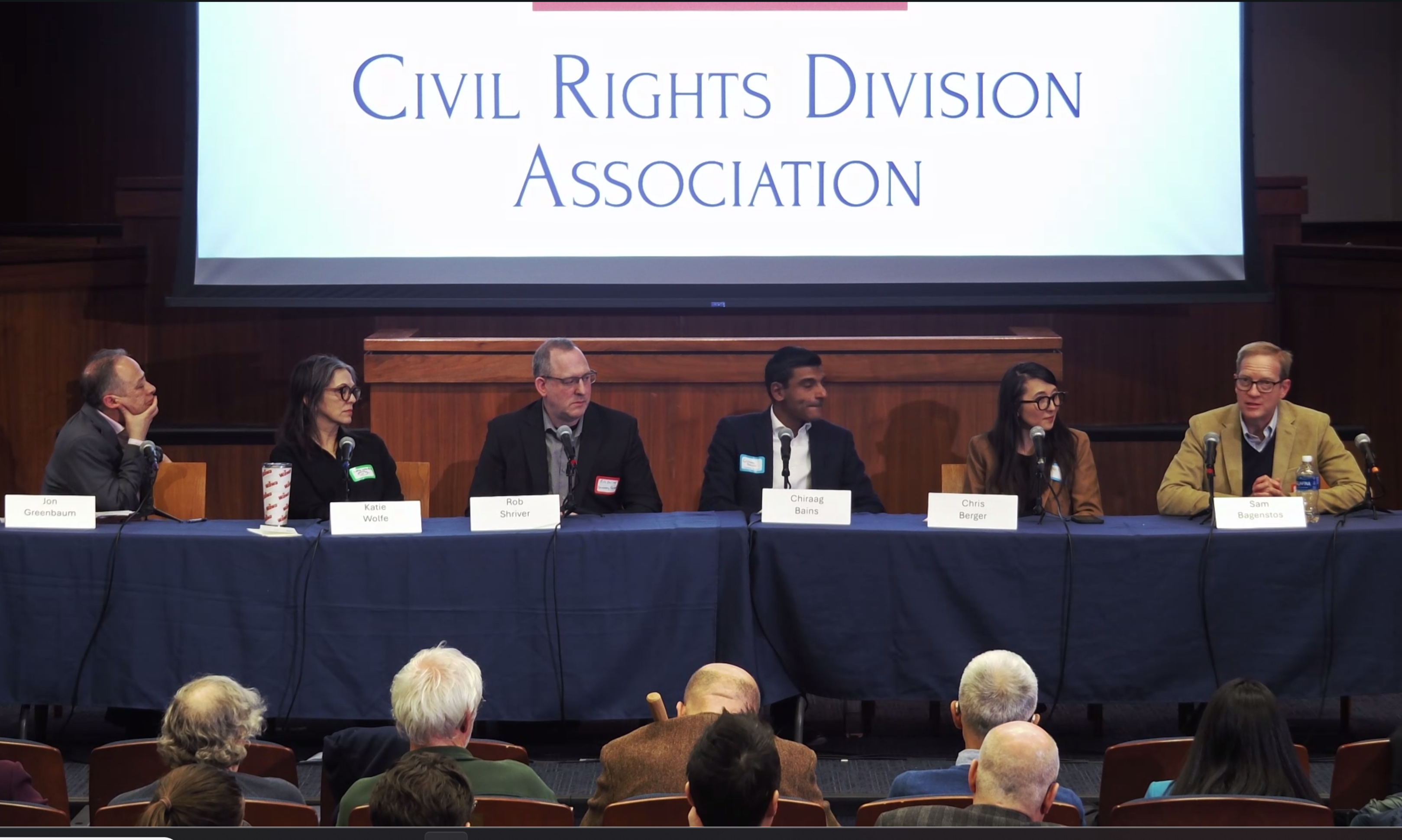
Members of "The Future" panel stressed the importance of starting now to plan the Division's future. Moderated by CRDA Vice President Jon Greenbaum, panelists discussed everything from strengthening civil service protections to improving efficiency in operations.
Former Principal Deputy Assistant Attorney General Sam Bagenstos (speaking in the photo above) shared insight that is also being published as an article, "The Dismantling of Civil Rights Protections and Thoughts" (coauthored with fellow University of Michigan professor and DOJ alum Ellen D. Katz). In their view, "there is no returning to precisely the same doctrinal and institutional structures set up in the second part of the twentieth century. Restoring the regime to provide the protections that existed on January 20, 2025, when the present assault began, would resurrect what was already a hollowed-out system whose operation fell far short of the aspirations that first propelled it." Instead, they "believe that a lasting infrastructure for civil rights enforcement requires direct engagement with the specific tactics the current Administration has used to dismantle the pre-existing system," specifically, "erasure, demolition, and weaponization." They argue "that rebuilding will require structures designed to withstand more effectively future efforts that seek to (1) erase existing data pertaining to race, ethnicity, and gender in a host of realms and terminate the further collection and reporting of such data by both public and private entities; (2) demolish federal civil rights offices within various agencies that worked to promote multi-racial democracy; and (3) weaponize the longstanding enforcement tools of civil rights law against the goals of multiracial equality and democracy."
Former Acting Assistant Attorney General Katie Wolfe and others also emphasized the importance of including former experienced career employees in any discussions about the Division's future. To that end, CRDA members who would like to be involved in potential discussions and planning regarding rebuilding the Division may contact the following panelists:
Rob Shriver
Managing Director, Civil Service Strong and Good Government Initiatives, Democracy Forward
CRDA members interested in participating should complete this survey:
https://airtable.com/appXtQb7xLOcXmGZP/pag4JDnACmmBBNNXw/form
Chris Berger
Patricia Bauman Senior Fellow, Brennan Center
Email: [email protected]
(202) 746-9639 (work cell)
Chiraag Bains
Consultant and Nonresident Senior Fellow, The Brookings Institution
Direct message through LinkedIn:
https://www.linkedin.com/in/chiraagbains/
5. PHOTO GALLERY

Additional photos can be viewed and uploaded here (Google sign-in required)
|
Howard law students register attendees |
Amanda Maisels welcomes attendees to the event |
|
Howard Law School Dean Roger Fairfax provides welcoming remarks |
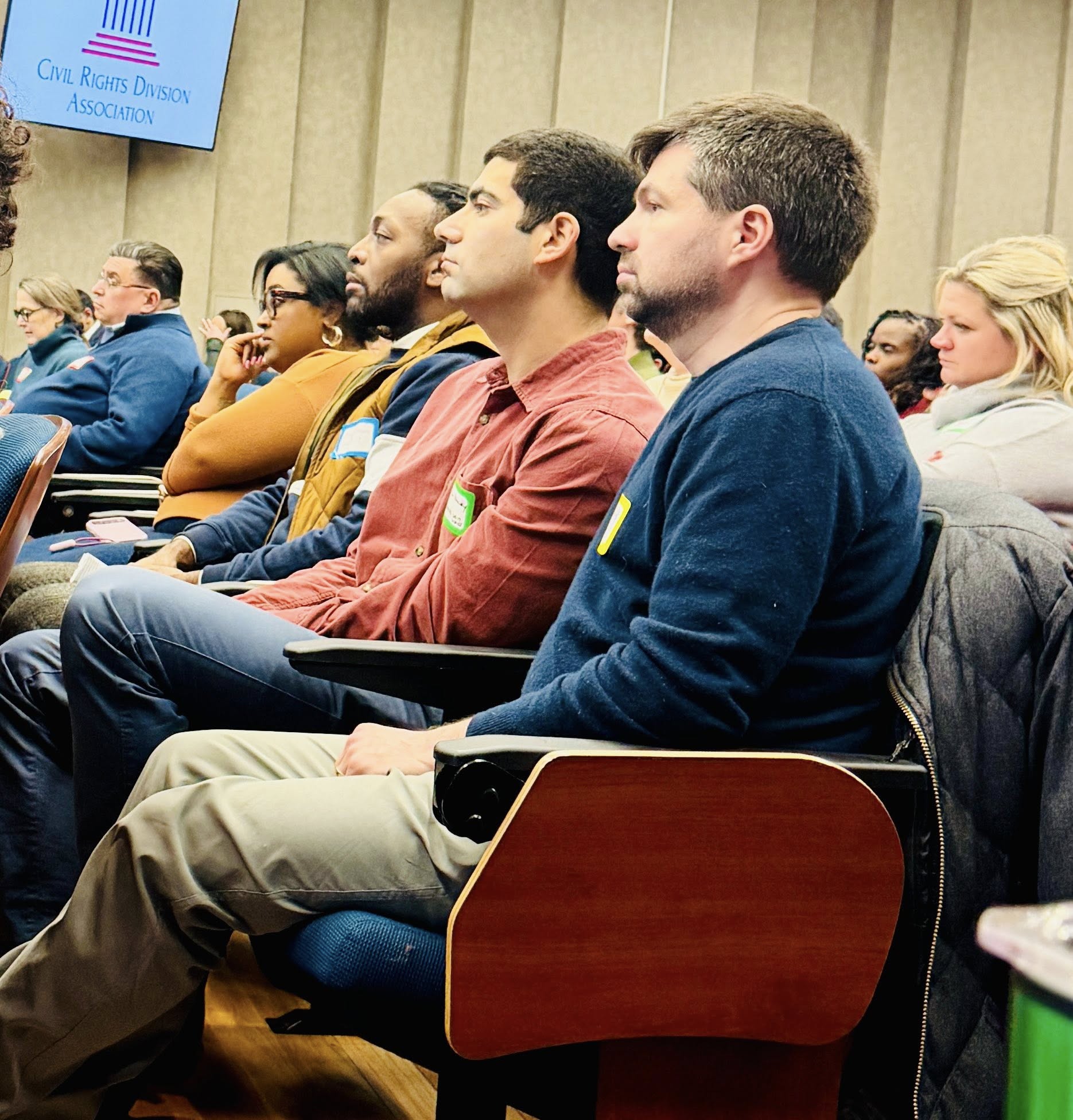
Attendees listen to the program
|
|
Anna Baldwin, Joy Welan, and Mike Campion discuss the Division's accomplishments on "The Past" panel |
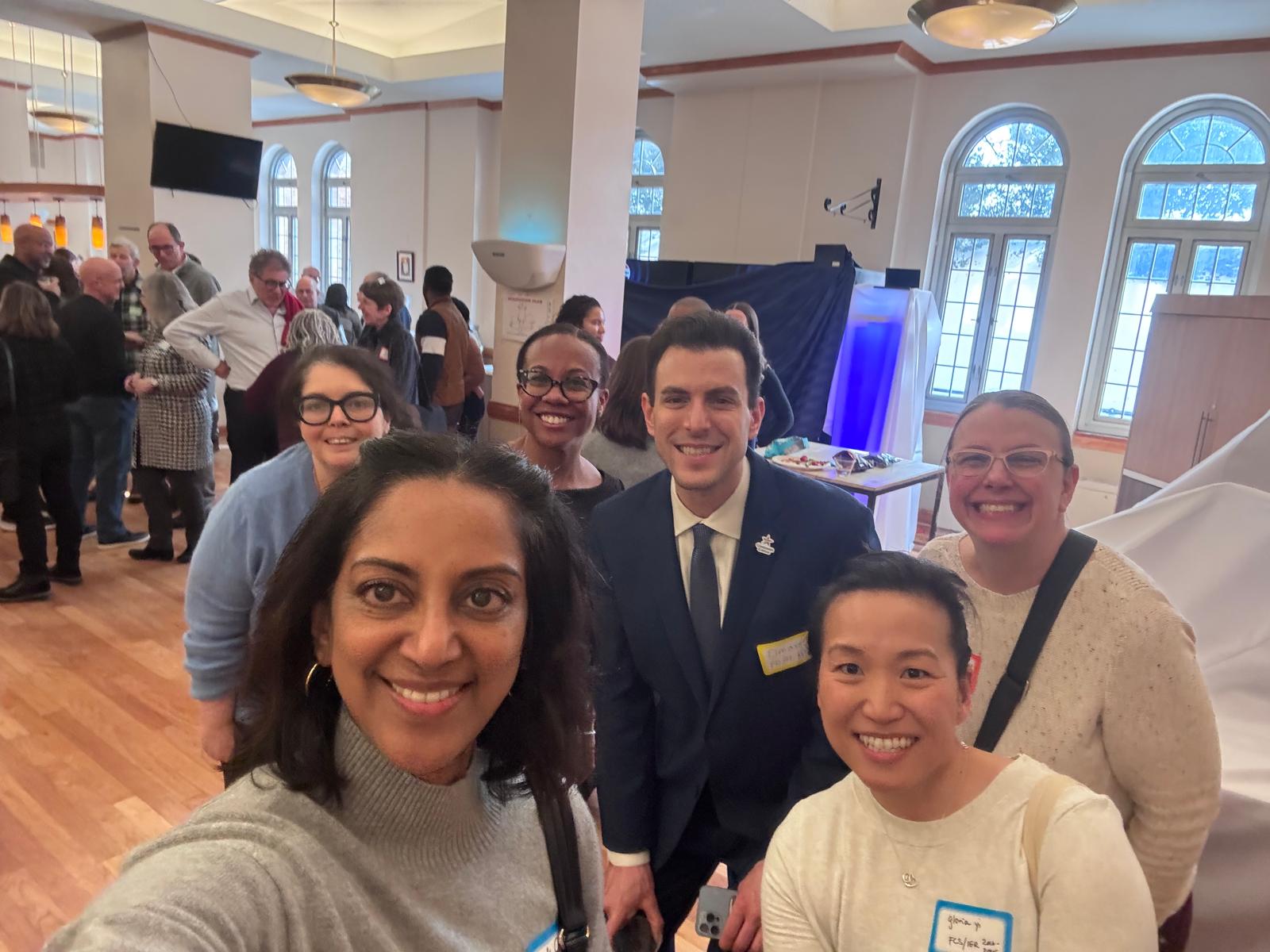
Lunch break selfie! |
|
Former Appellate Section colleagues Brant Levine, Jason Lee, Nic Riley, and Alisa Philo catch up over lunch |
Former Criminal Section members Mark Kappelhoff, Barbara Bosserman, and Hiram Puig-Lugo reunite during lunch |

Joe Rich and John Wodatch enjoying lunch together |
Jon Seward and Clay Guthridge |
|
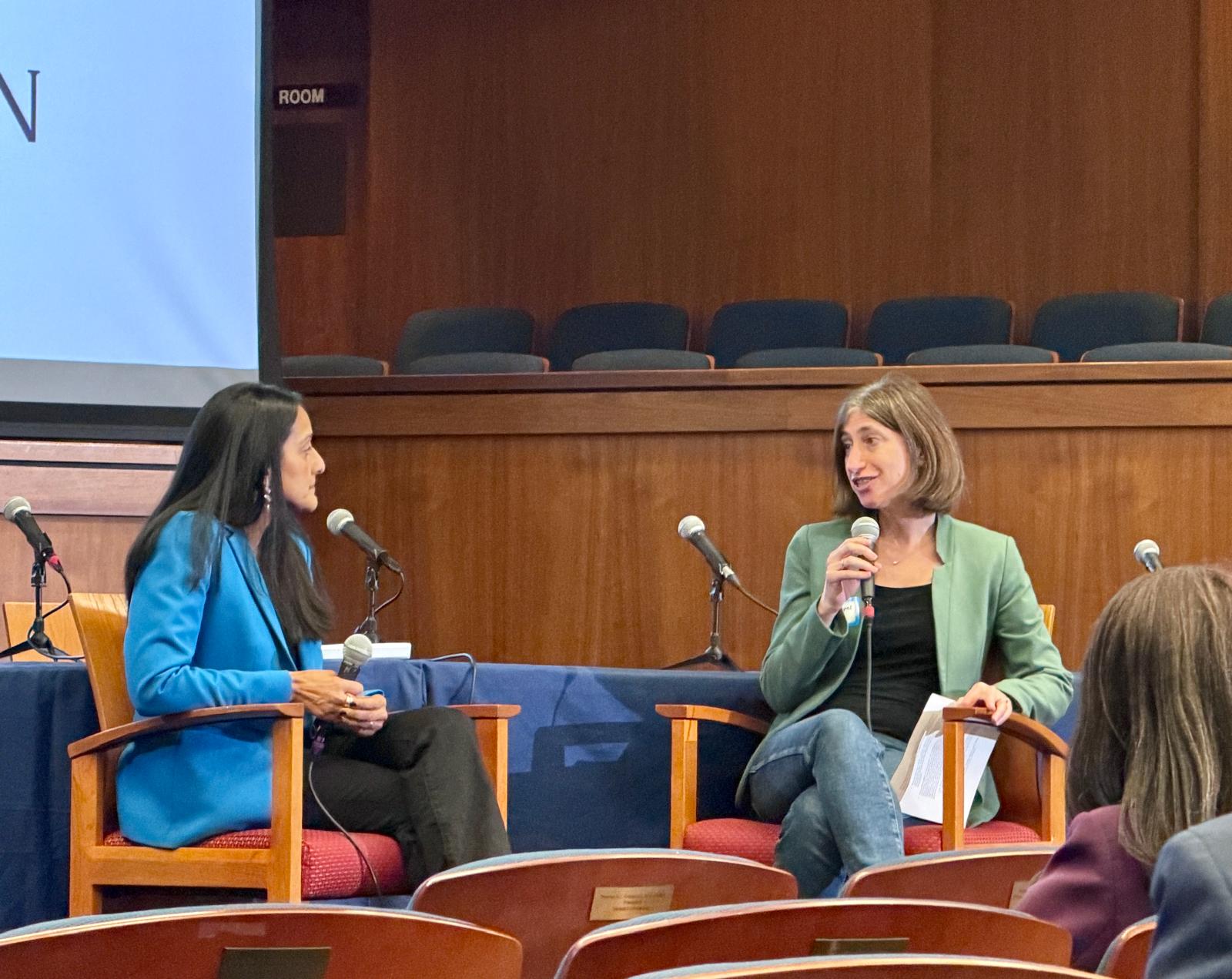
Sam Trepel interviews former Associate Attorney General and Acting Assistant Attorney General Vanita Gupta |
Former Division section chiefs Shaheena Simons, Christine Stoneman, Daria Neal, Tamar Hagler, Alberto Ruisanchez, and Steve Rosenbaum |
|
Bill Lann Lee, Kristen Clarke, Stuart Ishimaru, and Bill Yeomans |
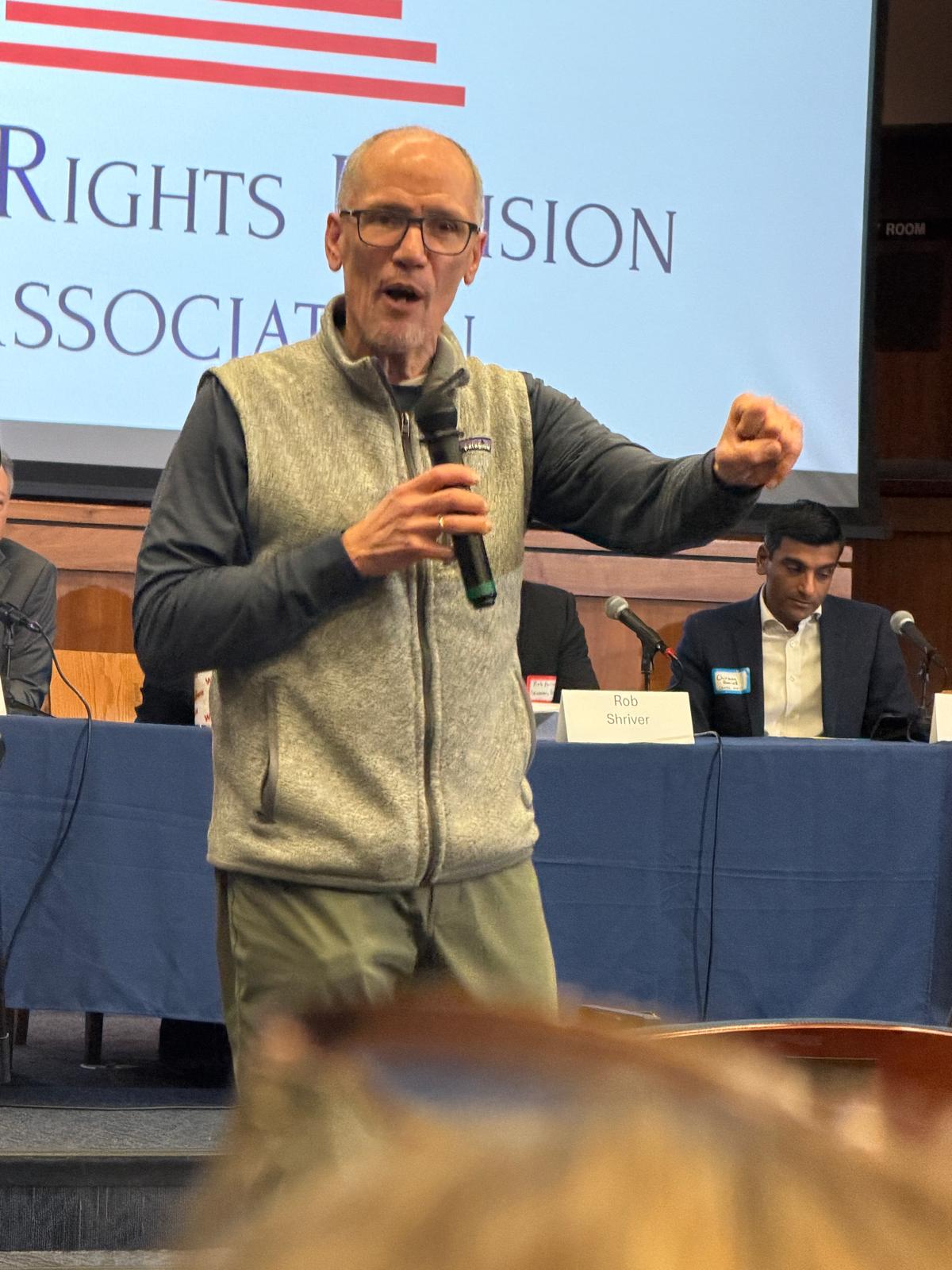
Former AAG Tom Perez speaks |
|
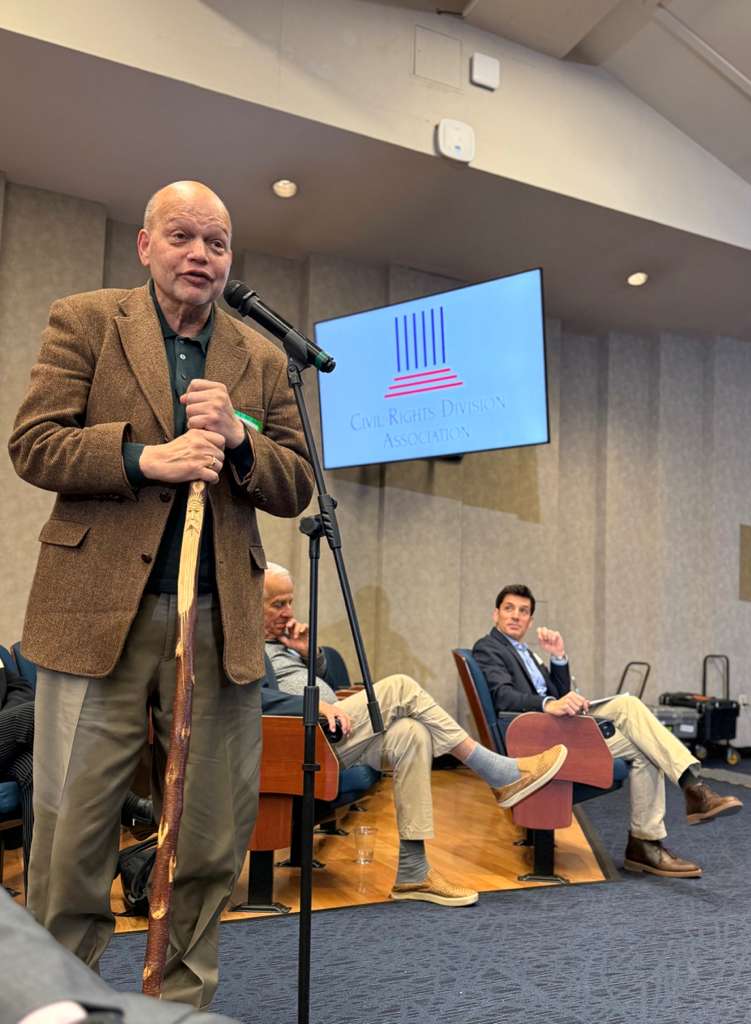
Ted Shaw asks a question and imparts wisdom |
Attendees enjoy a post-convening happy hour at Tikka Restaurant |
Do you like this page?