
Here is your Summer newsletter!
Civil Rights Division Association
NEWSLETTER
July 2026 (Issue 20)
The Civil Rights Division Association (CRDA) is a non-partisan organization composed primarily of former employees of the Department of Justice Civil Rights Division. The CRDA is a membership organization and is not affiliated with the U.S. Department of Justice or any other government agency. Any views expressed in the CRDA Newsletter are those of the author. The CRDA Newsletter provides information on CRDA activities, member updates, and information about the work of the Civil Rights Division. We are very excited to be able to stay connected with CRDA members and encourage member networking. Still need to join the CRDA? Please visit CRDA's website at CRDAssociation.org!
IN THIS ISSUE
1. FROM YOUR CRDA BOARD
2. ALUMNI UPDATES
3. RECENT ALUMNI EVENTS
4. ROUNDUP OF RECENT CIVIL RIGHTS DIVISION NEWS
5. CRDA MEMBER REFLECTIONS
6. IN MEMORIAM
7. JOIN THE CRDA LINKED IN GROUP
8. THANK YOU!
1. FROM THE CRDA BOARD
Your CRDA Board is pleased to announce that the Board approved amendments to CRDA's bylaws last month. The prior bylaws were written in 1998, at the CRDA's founding. The amendments are primarily designed to align this governing document with practice as it has developed over the past 28 (!) years. We'll post the new bylaws soon, at https://www.crdassociation.org/governance. Many thanks to Deena Fox for taking the laboring oar on the rewrite.
2. ALUMNI UPDATES
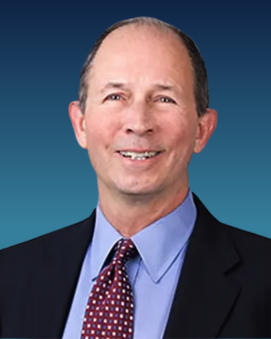
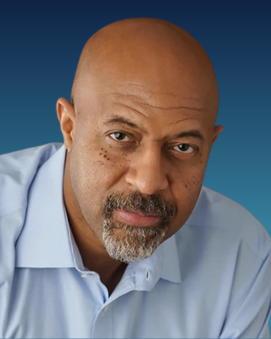
John Mott reports that, last year, he and Roy Austin, “in response to the administration’s assault on the rule of law, worked with other former DOJ lawyers to start up and now serve on the bi-partisan Steering Committee of the Washington Litigation Group (WLG)—a non-profit, pro bono law firm that represents individuals and groups targeted by the administration and brings affirmative cases to push back against government overreach.” John explains that they “formed the firm in direct response to the abdication of responsibility by and cooperation with the administration from so many in big law. Sadly for the country, the WLG has been busy both bringing our own cases and engaging in what is essential in this space: collaboration with other groups and individuals to get the job done effectively.”
John reports that, from its start in August 2025, they “have raised funds to bring on nine terrific full-time lawyers—including former Appellate Section member Sydney Foster—and the WLG is in the process of expanding to at least 12 attorneys. Among other notable strengths of the WLG and something that makes it unique is the firm’s combination of appellate acumen, its ability to handle civil and criminal matters at all levels, and the fact that the firm is run by an experienced, volunteer steering committee. Their team’s recent successes include the Kennedy Center, Stonewall, and Media Matters cases, and they are involved in dozens of ongoing matters related to preserving the rule of law, including substantial work in supporting state-level investigation and prosecution of the use of excessive force by federal law enforcement.”
John began his legal career in 1988 at the Public Defender Service for the District of Columbia representing indigent clients facing criminal felony charges. From 1995 until 2000 he served as a senior trial attorney in the Division's Criminal Section, eventually serving as that Section's Acting Chief. In 2000, President Clinton appointed John to the position of Associate Judge on the Superior Court for the District of Columbia, where he heard a broad mix of criminal and civil litigation for over 20 years. He is a graduate of Northeastern University School of Law.
Roy began his career in the Division's Criminal Section and later served as an Assistant U.S. Attorney. He returned to the Division in 2010 as a Deputy Assistant Attorney General after a stint in private practice and then later served as a Deputy Assistant to the President and head of the White House Office of Urban Affairs, Justice and Opportunity. There he worked on multiple initiatives, including the President’s Task Force on 21st Century Policing. During his tenure, he also co-authored a report on Big Data and Civil Rights and worked on the expansion of re-entry assistance for the formerly incarcerated. Additionally, Roy served as a member of President Obama’s My Brother’s Keeper Task Force. Roy received his J.D. from the University of Chicago.
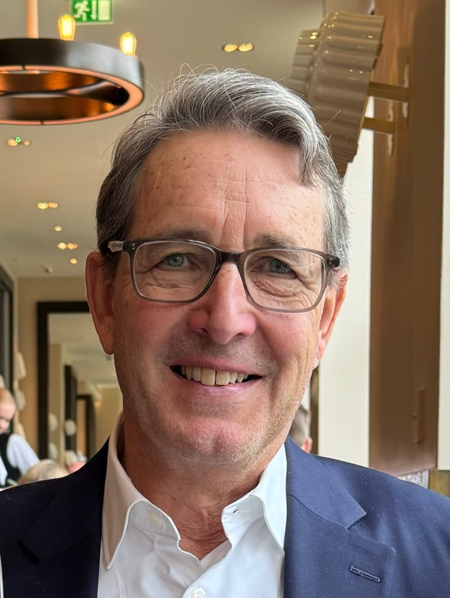
Tom Chandler retired as Chief of the Appellate Section at the end of 2021, after over 20 years in the Section and a career in government service. Tom reports that it has not been the retirement he expected. Since retiring, he has been chasing family around the world. With one son (and now two grandchildren) in Australia, he and his wife have made eight trips to Australia/Asia, usually for six to eight weeks at a time, often with stops along the way. Some favorite stopovers include the Middle East (before current events), the Maldives, Singapore, New Zealand, and Fiji.
The next trip is planned for the end of the year. When not traveling to Australia, he frequently travels to San Diego to see his other son and grandson, and to Florida to visit his soon-to-be 100-year-old father. As he notes, “at least they are all nice places to visit!” For a change of scenery, he also has trips planned to Egypt and Jordan, and to northern Norway and the Arctic Circle to look for polar bears. All of the traveling has not given him much time to do much else, other than plan the next trip.
He continues to follow the work of the Division and Appellate Section online, and fondly recalls his friends and colleagues there. He states that he is “particularly saddened at all of the departures.” He wishes his former colleagues well and would love to hear from them. And he emphasized that he remains extremely proud of, and grateful for, his association with the Division and all of the important work that it does.
3. RECENT ALUMNI EVENTS
WLC awards prestigious award to former Division staff

On May 27, the day before the Civil Rights Division’s 70th anniversary, the Washington Lawyers’ Committee for Civil Rights and Urban Affairs (WLC) presented the Wiley A. Branton Award to former Division career public servants. The Wiley A. Branton Award is the highest honor bestowed by WLC, recognizing extraordinary leadership and outstanding contributions to civil rights and equal justice. This was the first time that WLC gave the prestigious award not to an individual but to a group of lawyers, reflecting the collective and often unseen public service that has advanced civil rights protections across decades of administrations of both parties. Click here to view WLC’s video tribute to former Division career staff.
Former Deputy Assistant Attorney General Katie Wolfe accepted the award on behalf of the recipients, providing the following remarks:
Good afternoon. On behalf of the career alumni of the Civil Rights Division, I want to thank the Washington Lawyers’ Committee for this extraordinary honor. And to former Attorney General Lynch and former Acting Attorney General Keisler—thank for your service, your support, and your kind and inspiring words.
Today’s program has been incredible. To be in this company, and to receive an award named for Wiley Branton is to be reminded, just when we need it, of why we chose careers in public service in the first place: that the law is not a self-executing set of principles. It requires vigilance, persistence, and resilience—which, if you’re lucky, results in occasional victories big and small, or sometimes even just forward movement—leaving the next advocate in a slightly better position toward making the promise of equal protection a reality. That’s what a career in the Civil Rights Division was like for me and for my colleagues. We were lucky. We knew it. And we wouldn’t have traded it for anything.
And so, we went to the office on January 20, 2025, as we had on so many January 20ths before—ready to provide counsel and adapt to changing administration policies. And although it sounds ridiculously naïve from this vantage point, as the senior career official in the Division I was excited to share with incoming leadership the work they would be inheriting, which reflected unparalleled investigative work, legal acumen, skilled advocacy, and professionalism. How could anyone not see what I saw?
But it became very clear very quickly that this wasn’t just a policy shift; it was nothing short of the hollowing out of a sacred trust. We watched as over two-thirds of our colleagues—career experts with centuries of combined institutional knowledge—were forced out or felt they could no longer serve with integrity. There was a profound sense of professional grief—for our colleagues and their families, yes, but primarily a fear that if the Division was dismantled from within, the mission itself might not survive.
But we’re not here for a wake and this is not a eulogy; it is a testament to the resilience and courage shown by recipients of this award year after year. And a recognition that you can hollow out a building at 950 Pennsylvania Avenue, but you cannot hollow out a mission.
The expertise that left the Department didn’t vanish—it migrated. The people honored today have carried their commitment to civil rights beyond the Division, continuing the work wherever they serve. Across the country, former Civil Rights Division attorneys and staff have advanced that mission—joining civil rights organizations like the Lawyers Committee, serving in state and local government, moving into law firms, and working alongside countless others still fighting for justice. Some have also built new efforts of their own.
Red Line for Civil Rights—a project now housed at Democracy Forward—grew out of that same commitment. More than two dozen former Division attorneys and staff came together on their own time to build it, led by former Division leaders who believed the moment demanded careful documentation of what was happening to the work we care so deeply about. Today, Red Line carries forward the same fact-based approach we used at DOJ—to document changes in civil rights enforcement and make them visible to the public, advocates, and policymakers.
Just as importantly, we saw and continue to see that as the federal government stepped back, civil society stepped forward. To the advocates here: when DOJ retreated from protecting the ballot box, from protecting communities at the mercy of unconstitutional policing, or from protecting trans youth and adults from statutory and constitutional harms, you accelerated. You filled the gap with pro bono hours, impact litigation, and the resources—to fight the good fight, to demand a better and more equal America for all who call it home. And you “saw” us and many of you said, “Hey, come work with us.” And we’ll be forever grateful for the support from across the legal community.
So, if the "mission" is now more decentralized than it has ever been, I choose to believe that it is stronger for it. We are no longer waiting for a single agency to lead; we are and must be a network of leaders.
We accept this award in recognition of our work within the walls of DOJ, but more importantly, as motivation and inspiration for the critically important work we need to continue—together.
Thank you.
Former Civil Rights Division leaders launch Red Line for Civil Rights
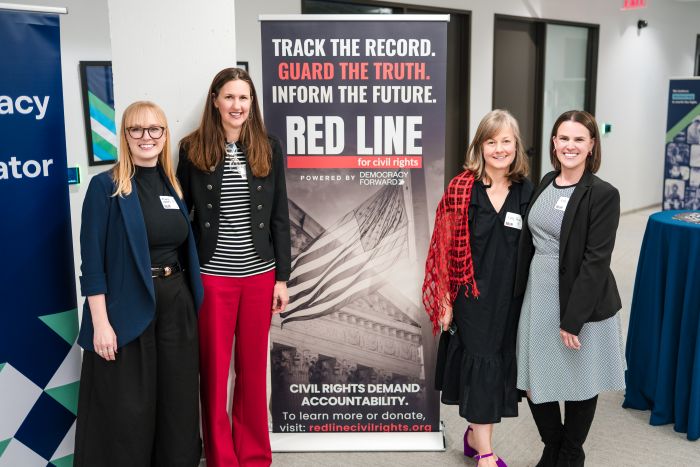
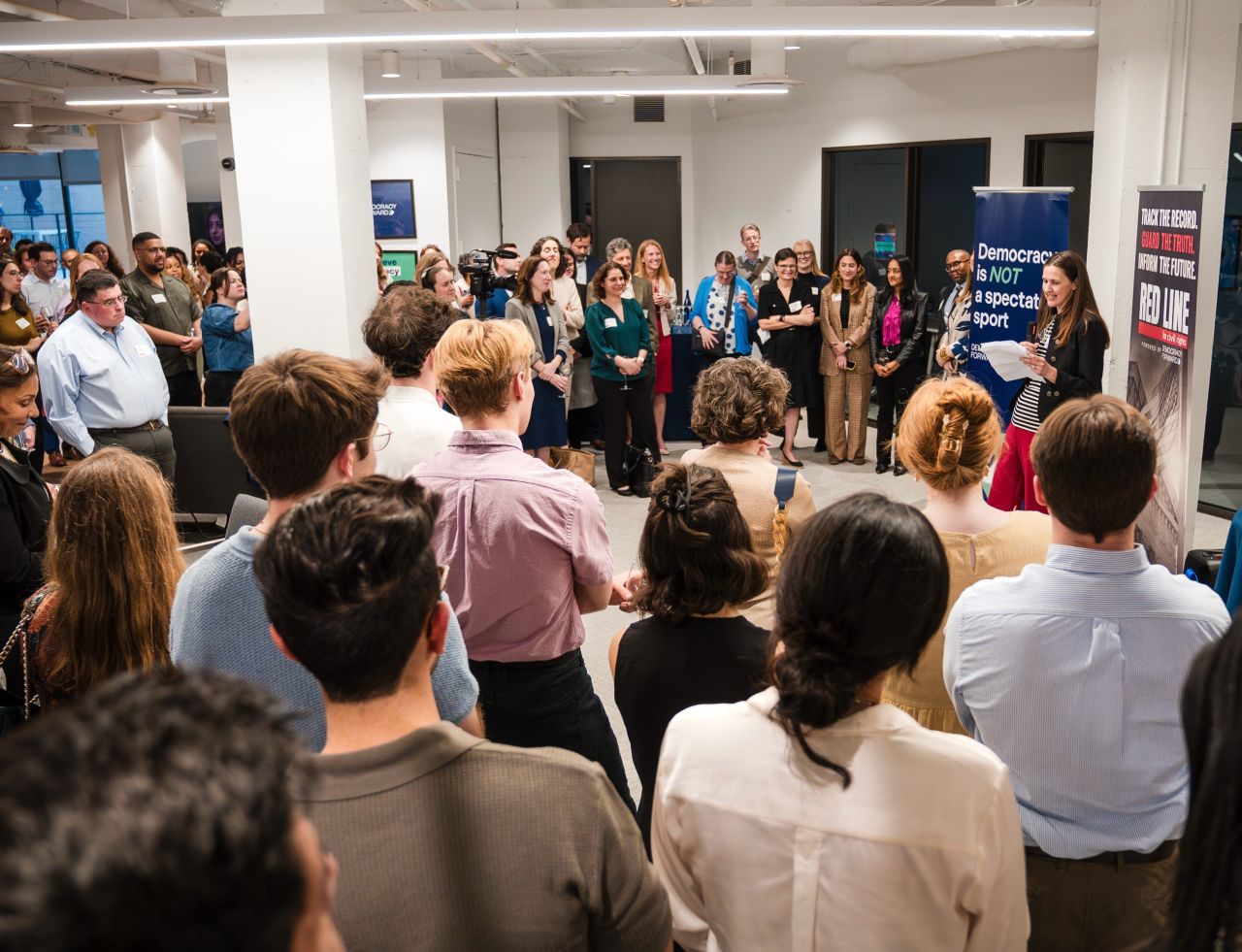
On May 13, former Special Litigation Chief Regan Rush and former Special Litigation Section Deputy Chief Megan Marks launched Red Line for Civil Rights, a new organization powered by Democracy Forward, that is tracking the current administration’s changes in the Civil Rights Division. The launch was attended by former Division staff and other members of the civil rights community. Pictured below in the first photo are Red Line team members Megan Marks, Regan Rush, Kelly Head, and KateLyn Smith. In the second photo, Regan Rush delivers remarks to attendees.
4. ROUNDUP OF RECENT CIVIL RIGHTS DIVISION NEWS
The Department releases its FACE Act “Weaponization” report and fires career prosecutors. On April 14, the Department’s "Weaponization Working Group" published an 882-page report accusing the Biden administration of “weaponizing” FACE Act enforcement against “pro-life Americans” and issued a directive requiring “extraordinary circumstances” before bringing FACE Act actions in the reproductive healthcare context in the future. The Department also fired at least four prosecutors who had worked on FACE Act prosecutions, including longtime Criminal Section attorney Sanjay Patel. Division alumni accused the Department of cherry-picking evidence. Former Special Litigation Section Chief Regan Rush told CBS News that the report “minimizes serious—and often violent—criminal conduct.” And former Criminal Section attorney Laura-Kate Bernstein noted that the report ignores victims, including a woman who miscarried after years of trying to conceive. Lawfare questioned the report’s conclusions; The Atlantic called it “a bust.”
The Division expands its targeting of policies supporting transgender youth in schools. On April 30, the Division launched investigations into 36 Illinois public school districts over “sexual orientation and gender ideology content,” bathroom access for transgender students, and sports participation. Assistant Attorney General Harmeet Dhillon stated the Division is “determined to put an end to local school authorities keeping parents in the dark.” Illinois Governor Pritzker sharply criticized the investigations as “belittling the rights and humanity of LGBTQ+ communities.”
Relatedly, on June 30, the Supreme Court ruled in West Virginia v. B.P.J. that Title IX allows schools to maintain sex-defined sports teams and that state laws barring transgender girls from girls’ teams do not violate Title IX or equal protection—agreeing with the Division’s position and the Department’s amicus brief in that case.
Finally, the Department of Education has entered an interagency agreement with the Division to enforce “parental rights” laws, initially targeting Kansas City schools over transgender student support and family communication policies. The agreement shifts OCR functions to DOJ. Former Education Opportunities Section Chief Shaheena Simons spoke to Bloomberg Law about the agreement, and Politico and K-12 Dive have also reported on the implications.
The Division targets transgender housing policies. Building on the California and Maine investigations reported in our April newsletter, the Division in May opened a third investigation into the Washington Corrections Center for Women (WCCW). According to the press release, the Department “will investigate allegations of deprivation of female prisoners’ Eighth Amendment protections from cruel and unusual punishment, including Washington’s response to allegations of sexual assaults, rape, voyeurism, and sexual intimidation based on WCCW’s policy of housing incarcerated transgender women consistent with their gender identity.
The Division also reversed course on prior administration positions in transgender inmate litigation in the Northern District of Georgia. Coverage appeared in The New York Times, USA Today, and NPR.
Relatedly, the Division filed a Complaint-in-Intervention in a suit challenging New York’s application of a state nondiscrimination law to a Catholic residential hospice care program, alleging that the law would require the program to house transgender women consistent with their gender identity in violation of the Equal Protection Clause.
The Division escalates Title VI enforcement against the use of race in admissions, with a focus on medical schools. In May, the Division issued findings that UCLA and Yale medical schools illegally used race in admissions in violation of Title VI and Students for Fair Admissions. The Division alleged Yale “intentionally selected applicants based on their race” and “studied how to use racial proxies to circumvent the Supreme Court’s prohibition.” Yale confirmed that it is actively negotiating with the Division regarding admissions processes of Yale School of Medicine, Yale College, and Yale Law School.
On June 4, the Division announced 15 additional medical school investigations—the largest batch of admissions probes ever opened. The Division also launched a Title VI investigation into DEI practices at Arizona State University. Coverage appeared in the Washington Post, New York Times, Guardian, and Inside Higher Ed. Critics argue that the administration is misreading the law and that diverse classes improve health outcomes for underserved communities.
OLC issues three opinions bearing on Division equities—two dismantling disparate-impact liability and one reinterpreting Olmstead. On June 9, the Department’s Office of Legal Counsel (OLC)) concluded that the EEOC’s disparate-impact guidelines under Title VII are unconstitutional, imposing heightened causation requirements and declaring workplace selection tools “presumptively job-related.” A companion opinion concluded the Equal Credit Opportunity Act does not create disparate-impact liability, reinforcing the Consumer Financial Protection Bureau’s April 2026 final rule. CRDA member Dylan de Kervor examined the opinion in context, tracing the systematic dismantling of disparate-impact liability and analyzing implications for enforcement. Former Division attorneys criticized the opinions: Stacey Young told CBS News that requiring discriminatory intent “will lead to a sharp increase in unchecked discrimination” and Johnathan Smith, a former Deputy Assistant Attorney General, called disparate impact “a vital tool in rooting out patterns of discrimination and unlawful conduct.”
On June 18, OLC issued memorandum concluding that neither Section 504 nor Title II of the ADA imposes an “integration mandate,” arguing that the Supreme Court’s decision in Olmstead v. L.C. ex rel. Zimring, 527 U.S. 581 (1999), “held only that a state cannot institutionalize patients without justification.” And on July 20, the Department issued a notice deeming the Division's Olmstead guidance non-enforceable. Alison Barkoff, a former DOJ political appointee who supervised Olmstead enforcement, told NPR that the federal government “since 1977 has taken the position that [federal law] includes an integration mandate.” She later told Disability Scoop that the July 20 notice "is further evidence of [the administration's] backing away from a decades-long commitment to enforcing the rights of people with disabilities to live and participate in their communities.”
Courts reject the Division’s campaign to obtain sensitive voter data as the Division threatens criminal action. Democracy Docket reports that in the lower courts, the Division has lost 12 out of 12 lawsuits in the 31 cases it has brought against states and DC to obtain sensitive voter data, as judges from across the ideological spectrum have ruled against the Department’s legal theories. The Division has moved to appeal all its losses to higher courts, but so far, it hasn’t found success. In June, the Sixth Circuit Court of Appeals affirmed a lower court’s dismissal of the DOJ’s voter roll lawsuit against Michigan.
Meanwhile, CBS News has confirmed that the Division recently sent letters to election officials in all 50 states threatening criminal action if they knowingly allow non-U.S. citizens to vote or to remain on their voter rolls.
The Second Amendment Section sues more jurisdictions. On May 5, the Division sued Denver over the City’s assault weapon ban; the following day it sued Colorado for its large-capacity magazine ban. On July 1, the Division sued Virginia over its assault weapons ban and California over its “Glock Ban” and “Handgun Roster.”
The Division intervenes in lawsuits challenging Evanston’s reparations program. On June 16, the Division moved to intervene in Flinn v. City of Evanston, challenging a program providing $25,000 to Black residents (or their descendants) who lived in the city between 1919 and 1969. The Division alleges that the program violates the Equal Protection Clause and FHA. The Hill and Democracy Now covered the intervention.
Civil rights groups document continued police misconduct in cities where the Division abandoned oversight. The ACLU and ProPublica published a report documenting continued excessive force in Minneapolis, Louisville, Phoenix, and Memphis after the administration rescinded consent decrees in May 2025. Bloomberg Law and the MacArthur Justice Center have also analyzed the consequences of abandoned federal police reform.
The Division announces hiring of 100+ new attorneys and staff. On July 8, Assistant Attorney Harmeet Dhillon announced that the Division had brought on over 100 new attorneys and staff. The announcement, which included a photo of the hires, has generated criticism for what appears to be a lack of diversity. Former Division attorneys also have spoken out about the new hires' lack of experience and political ideologies.
5. CRDA MEMBER REFLECTIONS
Protecting Civil Rights in a Time of National Crisis After 9/11, by Deepa Iyer (Civil Rights Division, 2000-2002)

I was a new attorney at the Civil Rights Division and a member of its National Origin Working Group when the attacks of September 11th occurred. As we mourned the devastating loss of life in New York, Pennsylvania, and the Pentagon, reports of backlash affecting South Asian, Arab, Muslim, and Sikh communities began reaching the Division, including vandalism at mosques, harassment of children in schools, workplace discrimination, profiling at airports, and violent attacks. On September 15, 2001, Balbir Singh Sodhi was killed at his gas station in Arizona in the first hate crime connected to 9/11.
Several attorneys in the Division’s National Origin Working Group believed that a proactive institutional response was necessary. We proposed that the Division conduct outreach to affected communities, share information about civil rights protections, and coordinate with counterparts across the federal government. In response, the Division formally established the Initiative to Combat Post-9/11 Discriminatory Backlash.
Over the weeks and months following 9/11, many civil rights attorneys volunteered to support the Initiative. We conducted intakes, referred complaints to appropriate government offices, and traveled across the country for community events to meet with organizational and faith leaders.
Given that many of the complaints that the Division received were under the jurisdiction of other government agencies, the Initiative also began coordinating an interagency taskforce to streamline information and meet regularly with organizations representing Muslim, Arab, South Asian and Sikh communities.
By building relationships with impacted groups, creating infrastructure for interagency coordination and quickly mobilizing resources and staff, the Division demonstrated what a national response to a civil rights crisis could look like.
Several years later, after leaving the Division to work at a national nonprofit advocating for South Asian communities, I participated in the Initiative’s interagency meetings from the other side of the table. I realized firsthand how valuable it was to have regular access to civil rights officials across the federal government. The meetings also created a rare space for advocates to speak honestly about the tensions that communities were experiencing as they sought the government’s civil rights protections while also confronting profiling, surveillance and immigration enforcement by other federal agencies.
As we mark the 25th anniversary of 9/11, the Division’s response in the immediate aftermath of a national crisis is a powerful reminder that civil rights agencies have a critical role and responsibility to play when the rights, safety and dignity of communities are under threat. Given that the communities affected by post 9/11 backlash continue to navigate discrimination, heightened scrutiny, and fear today, the lessons learned from the Division’s work 25 years ago remain as urgent as ever.
Reflection on where we are as a country, six years after the killing of George Floyd, by Howard Feinstein (Civil Rights Division, 1976-1987)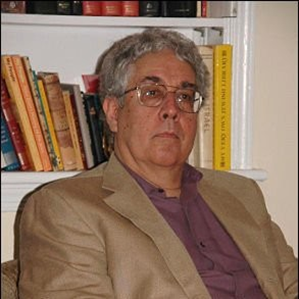
From the New York Times, 6/1/26: "Delegates to the Minnesota Republican Party's convention hold a moment of silence over the weekend for Derek Chauvin, a former Minneapolis police officer, six years after he murdered George Floyd and touched off a national reckoning over policing and race."
No, that is not a typo. The moment of silence was indeed for Chauvin, not Floyd. This in Minnesota, where the killing took place, a state known for its civilized bipartisanship. Good God, how low have things sunk?
- In 1963, televised scenes of Birmingham police attacking young civil rights protesters with dogs and fire hoses led to the passage of the 1964 Civil Rights Act.
- In 1965, televised scenes of Alabama troopers viciously beating nonviolent demonstrators led to the 1965 Voting Rights Act.
- And in 2020, the televised murder of George Floyd led to .... nothing. Yes, there were nationwide demonstrations; legislation was introduced; but nothing changed. And six years later, Floyd's killer is honored.
Attorneys with the Civil Rights Division, where I prosecuted similar cases, indicted Chauvin for violating Floyd's civil rights. Chauvin pleaded guilty, and is serving his sentence concurrently with his prison term for the state murder conviction.
Yes, justice was done. But that is just the legal aspect. As a country, we have a lot of work to do. We need to return to a time when racially-motivated violence becomes a springboard for remedial action, not an occasion to honor the perpetrators. It will take a good deal of time and energy. But it must be done.
6. IN MEMORIAM
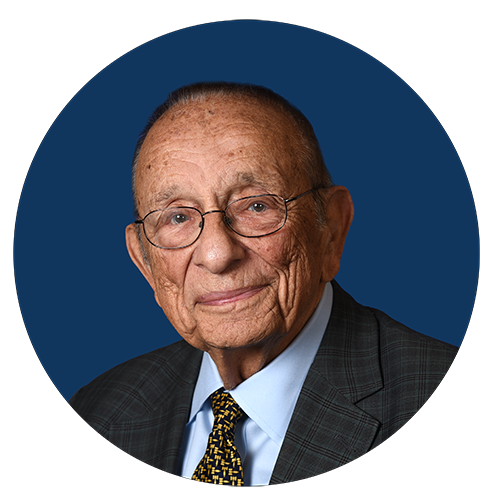
Howard Glickstein died on June 9, 2026, in his 97th year. Howard graduated from DeWitt Clinton High School in the Bronx and went on to graduate magna cum laude from Dartmouth College in 1951 and Yale Law School in 1954. After serving in the army and working in private practice, he joined the Civil Rights Division, where he helped to draft the Civil Rights Act of 1964 and the Voting Rights Act of 1965. He was then appointed to serve as General Counsel and later Staff Director of the United States Commission on Civil Rights. After leaving the government, he was the founding director of the Notre Dame Center for Civil Rights and was a professor at Howard Law School, and became Dean of University of Bridgeport School of Law in 1980. In 1986, he became Dean of Touro Law Center until his retirement. Touro’s Public Interest Fellowship Program honors Howard’s legacy.
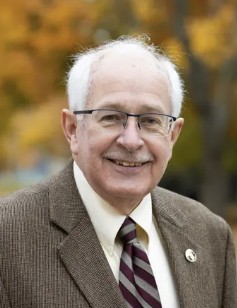
John Walter Williams, 73, passed away on May 13, 2026. John was born in Germany and grew up in a military family where he developed a great love of travel and a deep respect for diverse cultures. During his youth, he lived in Virginia; New Delhi, India; California; and Bangkok, Thailand. John spent his high school years in Bangkok, where he graduated from the International School of Bangkok. John went on to graduate from Principia College in Elsah, Illinois, and later earned a Juris Doctor from George Washington University.
His first job was as an attorney in the Civil Rights Division, grounding his career in a strong commitment to justice, civil rights, and service. John returned to Principia College in 1983, where he dedicated more than 40 years as a professor of mass communication and political science, shaping generations of students.
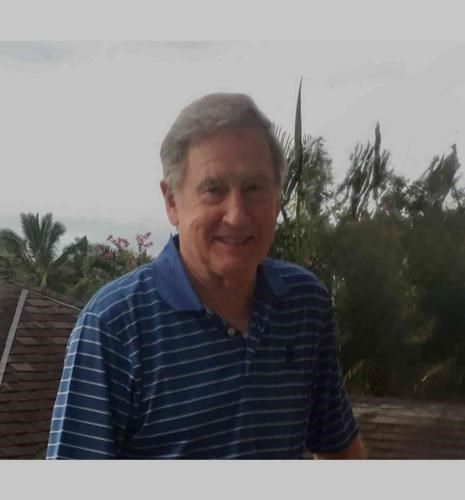
Joseph Ray Terry, 87, died on April 24, 2026. Born in Vicksburg on August 10, 1938, Ray was educated by the Brothers of the Sacred Heart at St. Aloysius High School, where he was a standout fullback and senior class football captain. He attended Hinds Junior College in Raymond, MS, and the Jesuit Seminary at St. Charles College in Grand Coteau, Louisiana. He graduated from Loyola University College of Law in New Orleans in 1965 and was named an Honors Law Graduate by U.S. Attorney General Nicholas Katzenbach. He began his legal career in Washington, DC as a Civil Rights Division attorney under John Doar. He presented key evidence to the grand jury in the case of United States v. Cecil Price, et al. (1967). Seven members of the Ku Klux Klan were convicted of denying three civil rights workers: James Chaney, Michael Schwerner, and Andrew Goodman of their "civil rights to life." Also known as "the Neshoba Murders," the trial was depicted in the movie "Mississippi Burning" (1988).
Over the next four decades, Ray fought for equal treatment of all citizens under the law. He fought school segregation in Louisiana under the Civil Rights Act of 1964 and was a leader in legally enforcing the Voting Rights Act of 1965 and the Civil Rights Act of 1968 regarding Fair Housing. As Regional Counsel for the Equal Employment Opportunity Commission (EEOC), he served as lead counsel in EEOC v. Liberty Mutual Insurance Co. (1972), a landmark case brought under the 1972 amendments to Title VII, resulting in a nationwide injunction against sex discrimination, ensuring equal rights for millions of women. Ray served as an Associate Regional Counsel for the U.S. Department of Housing and Urban Development in New Orleans and then as the Regional Counsel for the EEOC in Atlanta. Later, he became the Regional Attorney for the EEOC in Memphis. His legal career culminated as Deputy General Counsel of the EEOC in Washington, DC, the highest non-presidentially appointed position at that agency.
7. JOIN THE CRDA LINKEDIN GROUP

Have you joined our private LinkedIn Group yet? If not, you may be missing out on job announcements, civil rights news, and updates from former colleagues! Request to join now at this link.
THANK YOU!

Thank you to everyone who submitted content to the Newsletter, and a special thanks to this issue's editorial staff: Tovah R. Calderon, Dylan de Kervor, and Nadia Said.
Do you like this page?